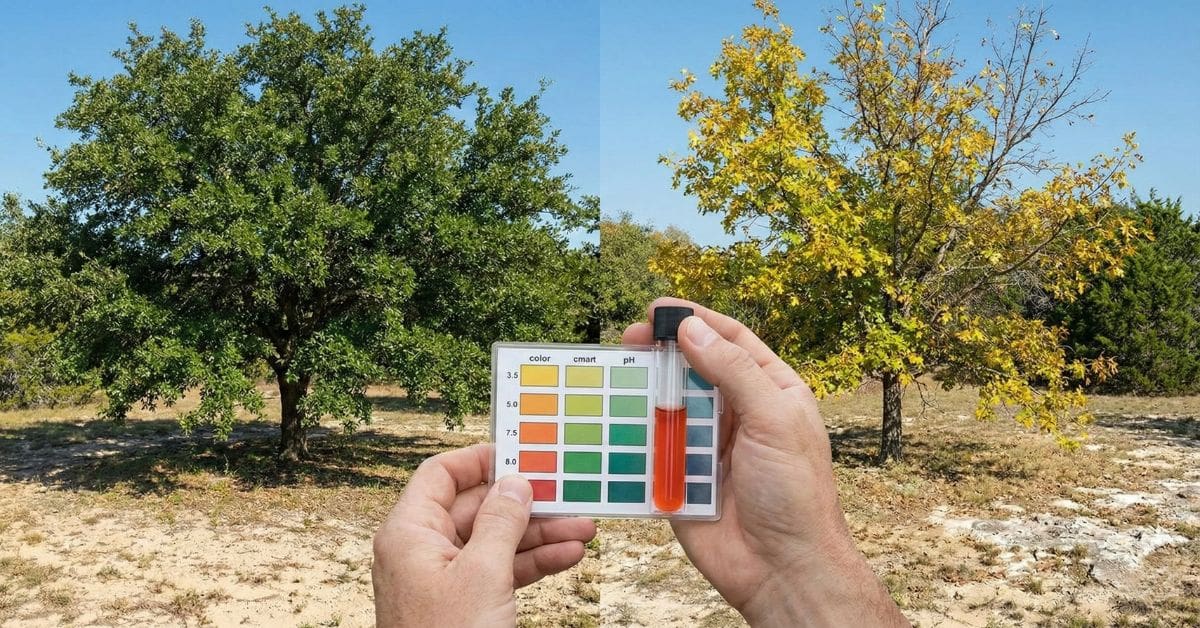
If you’ve noticed your trees looking stressed—wilting leaves, yellowing foliage, or gradual decline despite adequate watering—the culprit might be lurking underground. Phytophthora root rot is a serious but often overlooked tree disease that thrives in the heavy clay soils and poorly drained areas common throughout the Brazos Valley. Understanding this condition and recognizing its early warning signs can mean the difference between saving a beloved tree and watching it slowly decline.
What Is Phytophthora Root Rot?
Phytophthora is a plant-damaging water mold (oomycete) that attacks tree roots, destroying their ability to absorb water and nutrients. Unlike true fungi, Phytophthora species produce swimming spores called zoospores that actively move through waterlogged soil to find and infect plant roots. These pathogens thrive in wet, oxygen-deprived conditions—exactly what happens when water pools around tree roots in poorly drained clay soil.
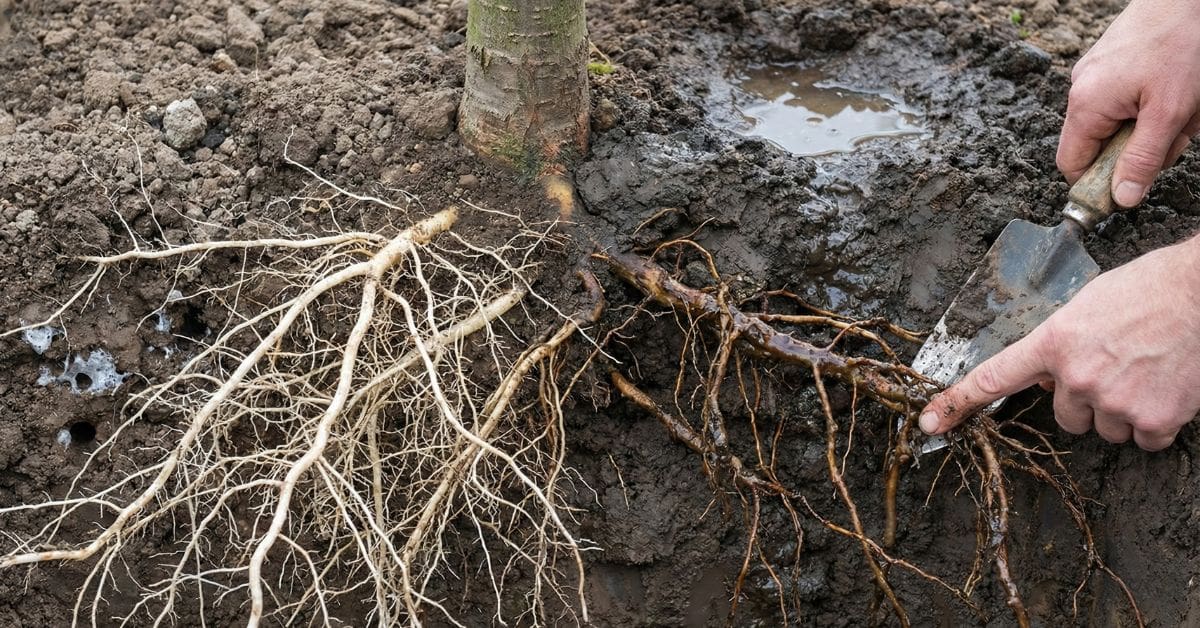
Once established, Phytophthora colonizes the fine feeder roots that trees depend on for water and nutrient absorption. As the infection spreads, roots begin to decay and turn black or mushy, often accompanied by a sour odor. The disease can then move upward into the crown and lower trunk, killing inner bark and causing browning of the outer sapwood layer.
Why Brazos Valley Soils Are Predisposed to This Problem
Clay-heavy soils, which are common throughout the Brazos Valley, create the perfect environment for Phytophthora to flourish. Here’s why:
Poor Drainage: Clay particles are tiny and tightly packed, leaving little space for water to escape. After rainfall or irrigation, water often pools at the root zone, suffocating roots and creating the damp conditions these pathogens love.
Soil Compaction: Over time, heavy clay becomes compacted under foot traffic, construction equipment, or even mowing. Compaction reduces oxygen exchange and forces roots to grow near the surface, making them more vulnerable to stress and infection.
Standing Water: Areas where water collects after rain or irrigation become breeding grounds for Phytophthora spores. The pathogen spreads through splashing rain, irrigation water, surface runoff, and movement of contaminated soil.
Visual Diagnostic Clues to Watch For
Because Phytophthora root rot operates below ground, its early symptoms often mimic other common problems like drought stress or nutrient deficiencies. Learning to recognize these warning signs can help you catch the disease before it’s too late.
Above-Ground Symptoms:
- Tree dying from the top down
- Leaves that wilt even when soil is moist
- Yellowing, thinning, or brittle foliage
- Leaves turning dull green, yellow, red, or purplish
- Stunted growth with smaller, weaker shoots than normal
- Trees that don’t recover when irrigated, unlike drought-stressed plants
Crown and Root Symptoms
- Darkened areas in the bark around the crown and upper roots
- Gum or dark sap oozing from the margins of diseased trunk areas
- Reddish-brown streaks or zones visible in inner bark when carefully cut away
- Soft, mushy roots with a foul, sour odor when examined
- Healthy roots should be firm and white; infected roots are brown or black and collapse when pressed
Advanced Warning Signs
- Mushrooms or fungal growth appearing near the base of the tree
- Trees that begin to lean or become structurally unstable
- Bark peeling in spots or becoming dark and mushy
Species Commonly Affected in Our Area
While many tree species can develop Phytophthora root rot, certain trees are particularly susceptible in Texas landscapes:
- Live oaks
- Post oaks
- Pecans
- Arborvitae
- Hollies
What You Can Do to Protect Your Trees
Site Management Is Key: The first and best treatment is addressing the environmental conditions that allow Phytophthora to thrive. This pathogen is soil-borne and soil-activated, meaning we typically see it with excess water.
Improve Drainage: Install French drains, adjust grading, or take other steps to redirect standing water away from tree roots. Aerate compacted soil to improve oxygen flow and allow water to drain more freely.
Water Wisely: Allow the soil to dry out fully between waterings. Avoid frequent shallow watering that keeps roots constantly moist. Don’t rely on sprinklers that may overwet the trunk of the tree.
Proper Mulching: A 2–4 inch layer of organic mulch helps regulate soil moisture and temperature, but mulch should never touch the trunk—piling it against the base traps moisture and encourages fungal growth.
The Importance of Early Intervention
The outcome for trees with Phytophthora depends largely on how soon the disease is diagnosed and intervention is implemented. If irrigation and drainage issues are resolved in combination with appropriate treatment, trees can improve. However, if there is excessive root disturbance or if the tree is in a later stage of the disease, recovery becomes unlikely.
Accurate diagnosis requires more than visual inspection—a fungal sample typically needs to be submitted for laboratory testing to confirm Phytophthora. Treatment is not always the best option because Phytophthora will often go away if you can control environmental stress.
If you suspect your trees may be struggling with Phytophthora root rot or notice any of these warning signs, give us a call at Texas Tree Services—we’re here to help diagnose the problem and develop a plan to preserve your valuable trees.