If you’ve noticed your trees looking stressed, with yellowing leaves, stunted growth, or unexplained dieback, the culprit might be hiding right beneath your feet. Soil pH—a measure of how acidic or alkaline your soil is—plays a crucial role in determining whether your trees can access the nutrients they need to thrive. Here in the Brazos Valley, understanding and managing soil pH can make the difference between a struggling tree and a flourishing one.
What Is Soil pH and Why Does It Matter?
Soil pH is measured on a scale from 0 to 14, with 7 being neutral. Values below 7 indicate acidic soil, while values above 7 indicate alkaline soil. Most trees prefer a slightly acidic to neutral pH range, typically between 5.5 and 7.0, though this varies by species.
The reason pH matters so much is that it directly affects nutrient availability. Even if your soil contains adequate amounts of essential nutrients like iron, manganese, zinc, and phosphorus, those nutrients may be chemically “locked up” and unavailable to your trees if the pH is too high or too low.
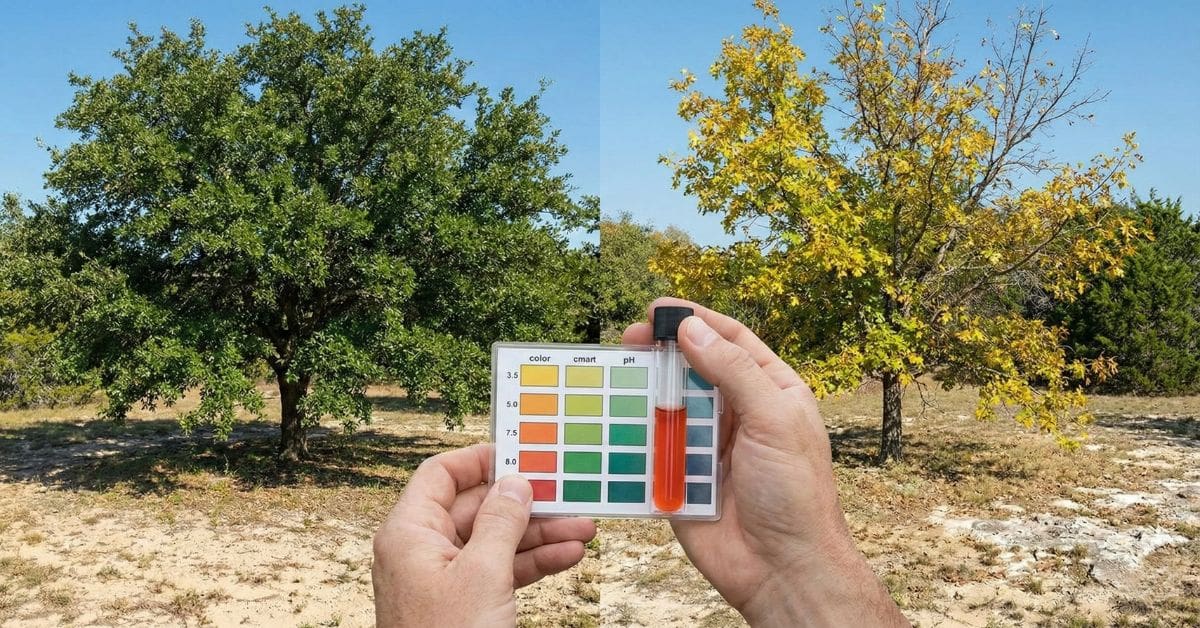
In acidic soils (pH below 5.5), certain nutrients like aluminum and manganese can become overly available, reaching toxic levels that damage roots and stunt growth. Meanwhile, calcium, magnesium, and phosphorus may become deficient. In alkaline soils (pH above 7.5), iron, manganese, zinc, and copper become increasingly unavailable, often leading to interveinal chlorosis—a condition where leaves turn yellow while the veins remain green.
Common pH-Related Problems in the Brazos Valley
Here in Central Texas, many of our soils tend toward neutral to slightly alkaline, particularly in areas with limestone bedrock or caliche. This can create challenges for acid-loving trees like Shumard Oaks, Red Maples, and Magnolias.
Common signs of pH-related nutrient deficiency include:
- Iron chlorosis: Yellowing between leaf veins, especially on new growth
- Manganese deficiency: Similar chlorosis patterns on slightly older leaves
- Stunted growth and sparse canopies
- Increased susceptibility to pests and diseases
- Poor root development and reduced drought tolerance
On the flip side, if you have unusually acidic soil—sometimes found in sandy, heavily leached areas or around old agricultural sites—you might see symptoms of calcium or magnesium deficiency, including tip dieback, weak shoots, and poor overall vigor.
How to Determine Your Soil pH
Before making any amendments, it’s essential to know your starting point. A professional soil test from a laboratory like the Texas A&M Soil, Water, and Forage Testing Laboratory or Waypoint Analytical provides accurate pH readings along with nutrient levels, organic matter content, and soil texture. This information allows us to develop a targeted plan rather than guessing.
We recommend testing soil from multiple locations within the root zone of your trees, as pH can vary across a property. For large ranch properties with diverse landscapes, several samples may be necessary to get a complete picture.
Options to Adjust Soil pH
Raising pH (for acidic soils)
If your soil is too acidic, applying agricultural lime (calcium carbonate) or dolomitic lime (which also adds magnesium) can gradually raise the pH. Key considerations:
- Apply lime based on soil test recommendations—more isn’t always better and can actually be harmful
- Incorporate lime into the top several inches of soil where possible
- Allow 6–12 months for pH to adjust; retest before additional applications
- Avoid overshooting your target pH
Lowering pH (for alkaline soils)
Lowering soil pH is more challenging, especially in our region, where soils often contain free lime (calcium carbonate) that continuously buffers the pH upward. Options include:
- Elemental sulfur: Soil bacteria convert sulfur to sulfuric acid, gradually lowering pH. Results take months and require adequate moisture and warm temperatures.
- Acidifying fertilizers: Ammonium sulfate and other ammonium-based fertilizers have an acidifying effect over time.
- Iron sulfate: Provides a quicker but smaller pH shift while also supplying iron.
In heavily calcareous soils, achieving lasting pH reduction is often impractical. In these situations, we focus on supplying nutrients in plant-available forms (such as chelated iron) and selecting tree species adapted to higher pH conditions.
Improving Overall Soil Health
Beyond pH adjustment, improving soil health supports nutrient availability and tree vigor:
- Mulching: A 3–4 inch layer of coarse, woody mulch under the canopy (kept away from the trunk) conserves moisture, moderates temperature, and gradually adds organic matter as it decomposes. Over time, decomposing mulch can slightly acidify the soil surface and enhance microbial activity.
- Organic matter additions: Compost top-dressings improve soil structure, water retention, and nutrient cycling. Higher organic matter also increases cation exchange capacity, helping soil hold onto essential nutrients.
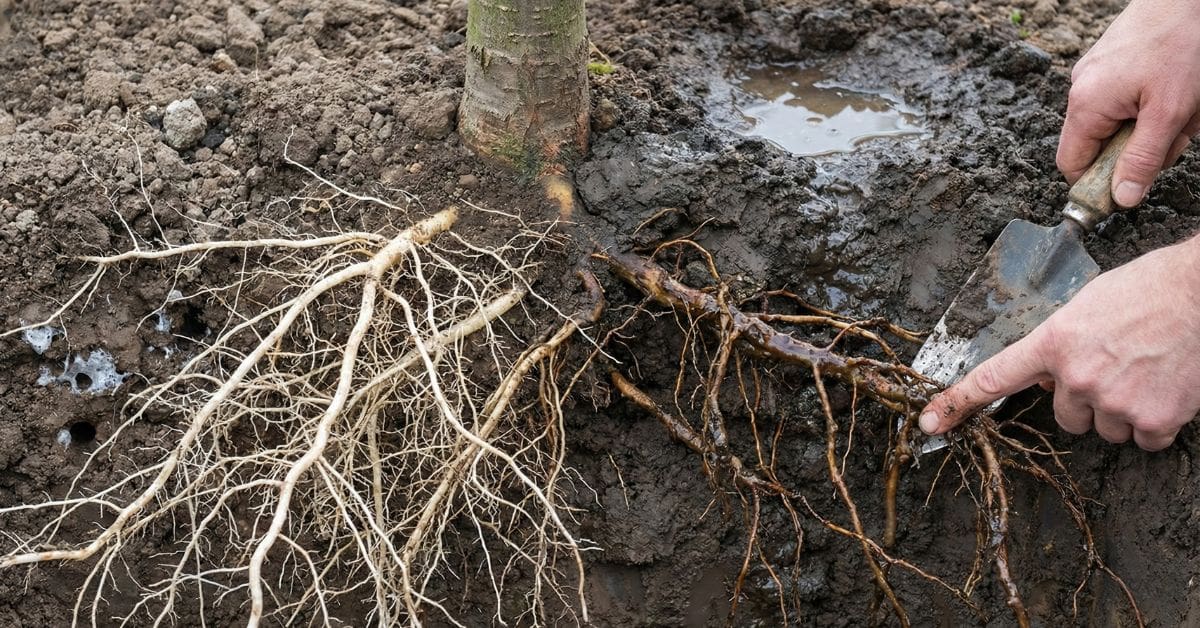
- Reducing compaction: Compacted soil limits root growth and oxygen availability. Air-spade decompaction or vertical mulching can restore root zone health.
- Proper watering: Deep, infrequent irrigation encourages deep root development and supports beneficial soil microbes and mycorrhizal fungi that help trees access nutrients.
Choosing the Right Trees for Your Soil
Sometimes the best strategy is working with your soil rather than against it. If your property has persistently alkaline soil, consider species that tolerate higher pH, such as Live Oak, American Birch, Texas Ash, or Bur Oak. For acidic sites, Pin Oak, Willow Oak, and Sweetgum may thrive. Matching species to site conditions reduces long-term management costs and supports healthier, more resilient trees.
Let Us Help
Understanding soil pH and its effects on tree health can feel overwhelming, but you don’t have to figure it out alone. At Texas Tree Services, we specialize in diagnosing nutrient deficiencies, interpreting soil tests, and developing customized care plans for trees across the Brazos Valley. Whether you’re managing a single heritage oak in your backyard or hundreds of acres of ranch land, we’re here to help your trees reach their full potential.
Give us a call today if you’re concerned about your trees’ health—we’d love to help you get to the root of the problem.